How to Maximize Commercial Roll-Off Dumpster Space

construction 1 scaled

An important factor in choosing the right dumpster sizes for your commercial needs is learning how to maximize the space. Effectively using every square yard reduces disposal costs, minimizes your environmental impact, and improves your workflow.

If you’re not sure how to make the most of your dumpster, you’ve come to the right place. In this blog, we explore a variety of techniques and strategies to help you get the most value out of your dumpster, regardless of its size.

From small-scale renovations to large construction projects, these tips help you streamline your waste management process. Dive in to learn more about:

Why is maximizing commercial roll-off dumpster space important?

The size of your budget often dictates the commercial dumpster sizes you choose. Using the available space efficiently reduces the number of hauls required to empty your dumpster, lowering your disposal costs.

Proper space management techniques help you make the most out of each pickup or reduce your pickups to just one for ultimate savings.

If saving money isn’t motivation enough, here are three more reasons to figure out how to safely pack in your junk:

  • It contributes to environmental sustainability. Many businesses strive to reduce their carbon footprint. Minimizing the frequently of hauls makes the waste disposal process more environmentally friendly. When you maximize your space, you also make it easier to sort and recycle materials that don’t belong in the local landfill.
  • It increases operational efficiency. Contractors and project managers appreciate disposing of waste promptly without the hassle of overflowing dumpsters or frequent interruptions due to disposal logistics.
  • It makes hauling full dumpsters safer. Roll-off dumpster delivery drivers dread moving overfilled dumpsters. Not only is it dangerous for them, but it also poses a safety risk for other motorists on the roadways during transport. Maximizing your space ensures items stay safely below the top of the dumpster.
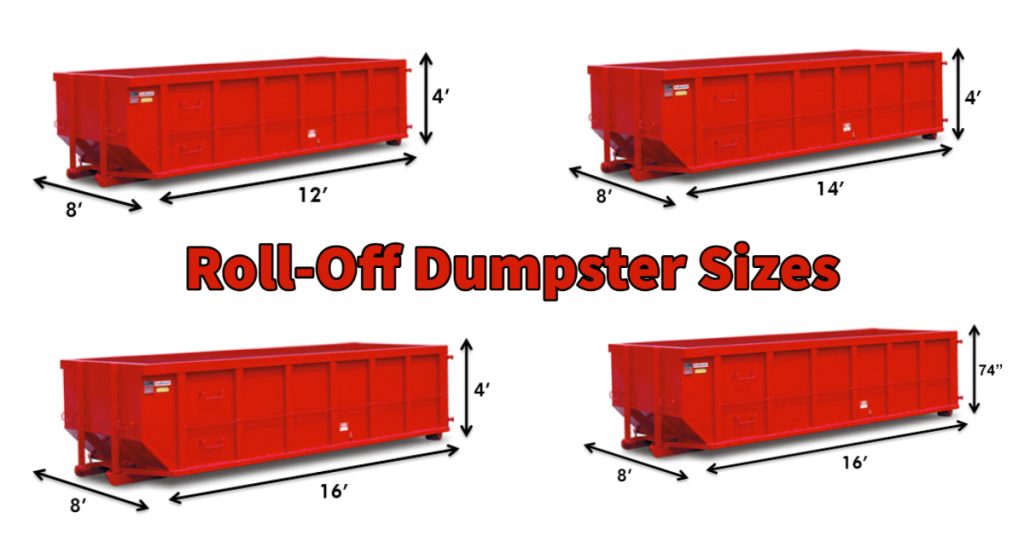
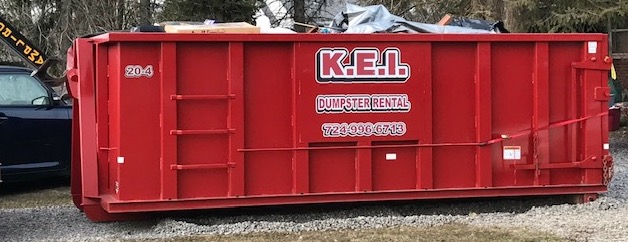
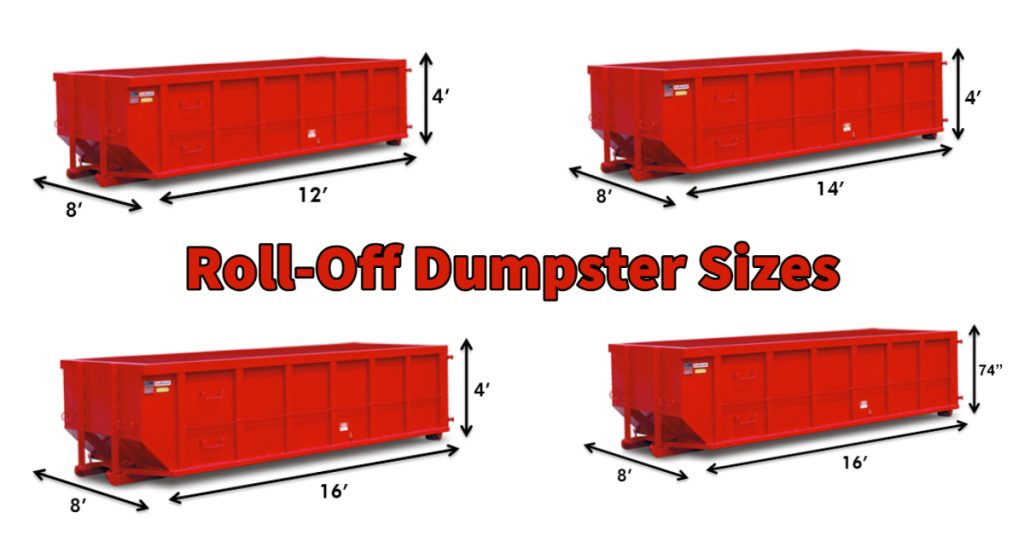
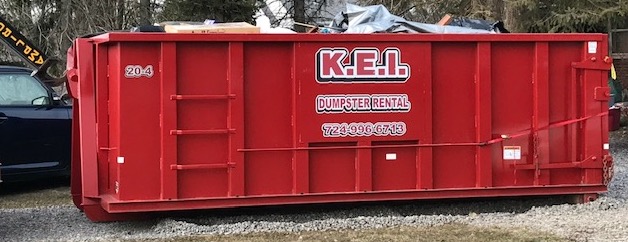
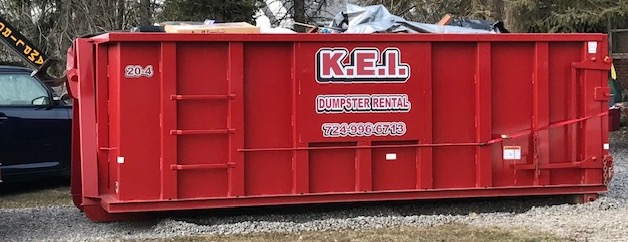
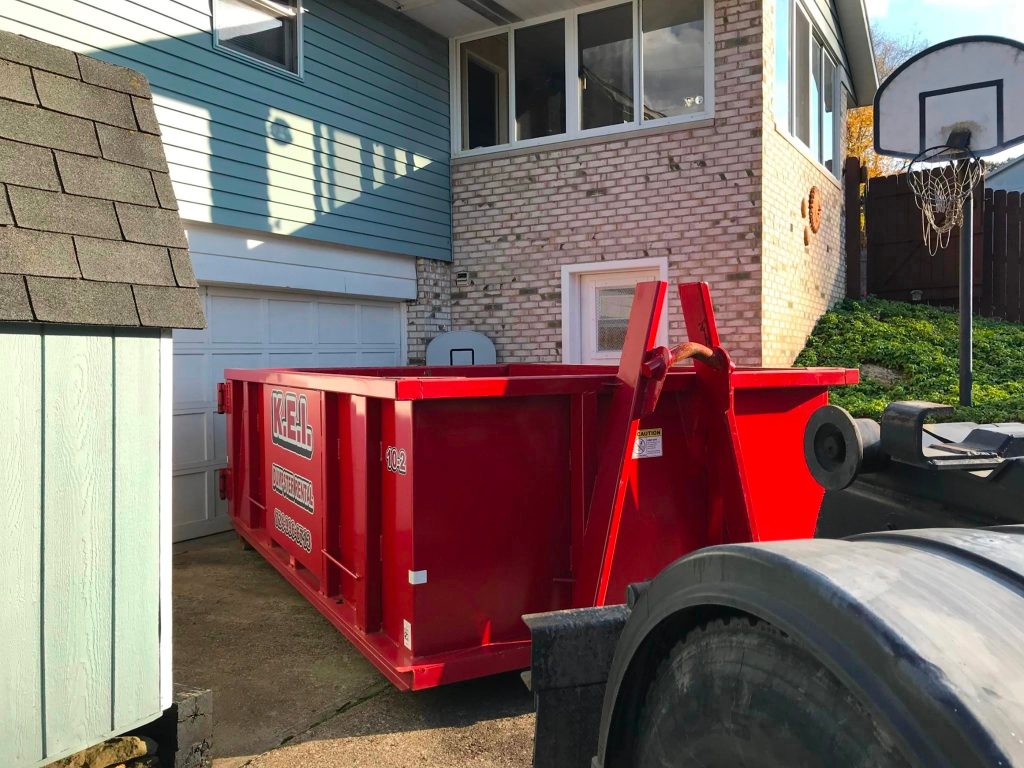
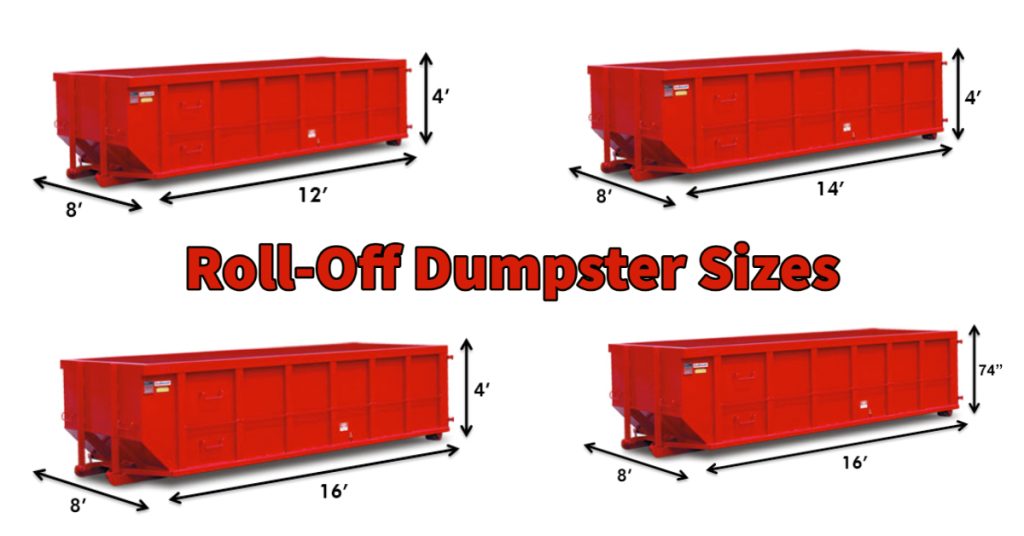
Roll-off dumpster sizes in four options with KEI pictured.

How do you select the right commercial dumpster sizes?

Selecting the right commercial dumpster sizes for your project ensures efficient waste management and cost-effectiveness. If you’ve never rented a dumpster for your business before, use the following tips to right-size your roll-off dumpster.

Step 1: Estimate your waste volume

Figuring out how much waste your project is likely to generate is the first step in choosing the right dumpster size. Consider the type of waste, the duration of your project, and the number of workers involved.

Larger construction projects may require a 20- or 25-yard container that can hold between 3 and 3.5 tons of material.

Step 2: Consider waste types

Different types of waste have varying densities. Some may occupy more space than others. For example, bulky materials like furniture and construction debris require more room than lighter items like packaging materials.

Step 3: Assess space constraints

Limited space at a commercial project site contributes to the size of the roll-off dumpster you request. Measure your allotted space and use it to decide which dumpster size works best. Consider factors like accessibility, parking restrictions, and any other obstacles that affect pickup and delivery.

Remember to account for the space needed for the delivery truck to safely drop off and pick up your commercial dumpster.

Step 4: Factor in project duration

Longer projects typically generate more waste. Managers for commercial projects that span several weeks or months must plan accordingly. Selecting the largest size of roll-off dumpsters you can accommodate on-site is the best approach.

You also may want to consider an empty-and-return plan that arranges for the dumpster rental service to pick up full dumpsters and replace them with empty ones for the duration of your project.

Step 5: Review local regulations

Local regulations factor into your decision on dumpster sizes for your commercial projects. Some municipalities, cities, and towns have specific guidelines dictating dumpster sizes, disposal procedures, and required permits.

Some dumpster rental services know these policies and can share the information with you. Others may expect you to know and follow local ordinances when placing your order. Ignoring these mandates can cause legal issues.

Step 6: Consult dumpster rental services

When in doubt, talk with a team member at the roll-off dumpster rental service you plan to use. They can provide valuable guidance and recommend appropriate dumpster sizes based on their experience and expertise.

Some dumpster rental companies offer on-site evaluations to assess your needs accurately. Ask if yours is one of them.
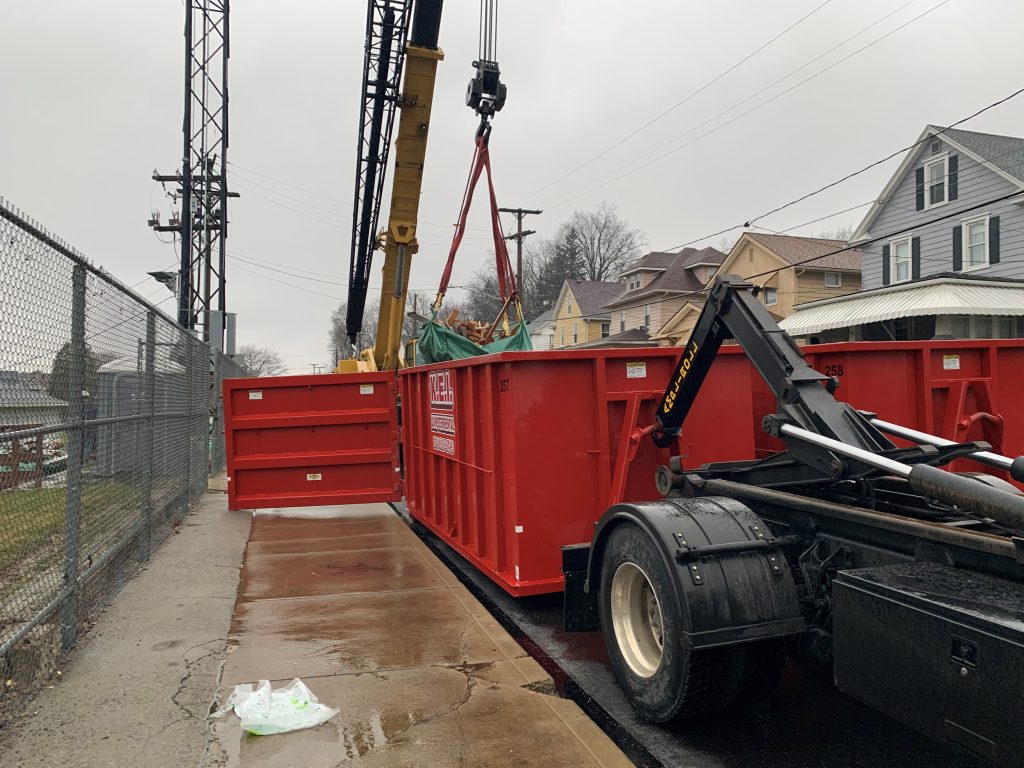
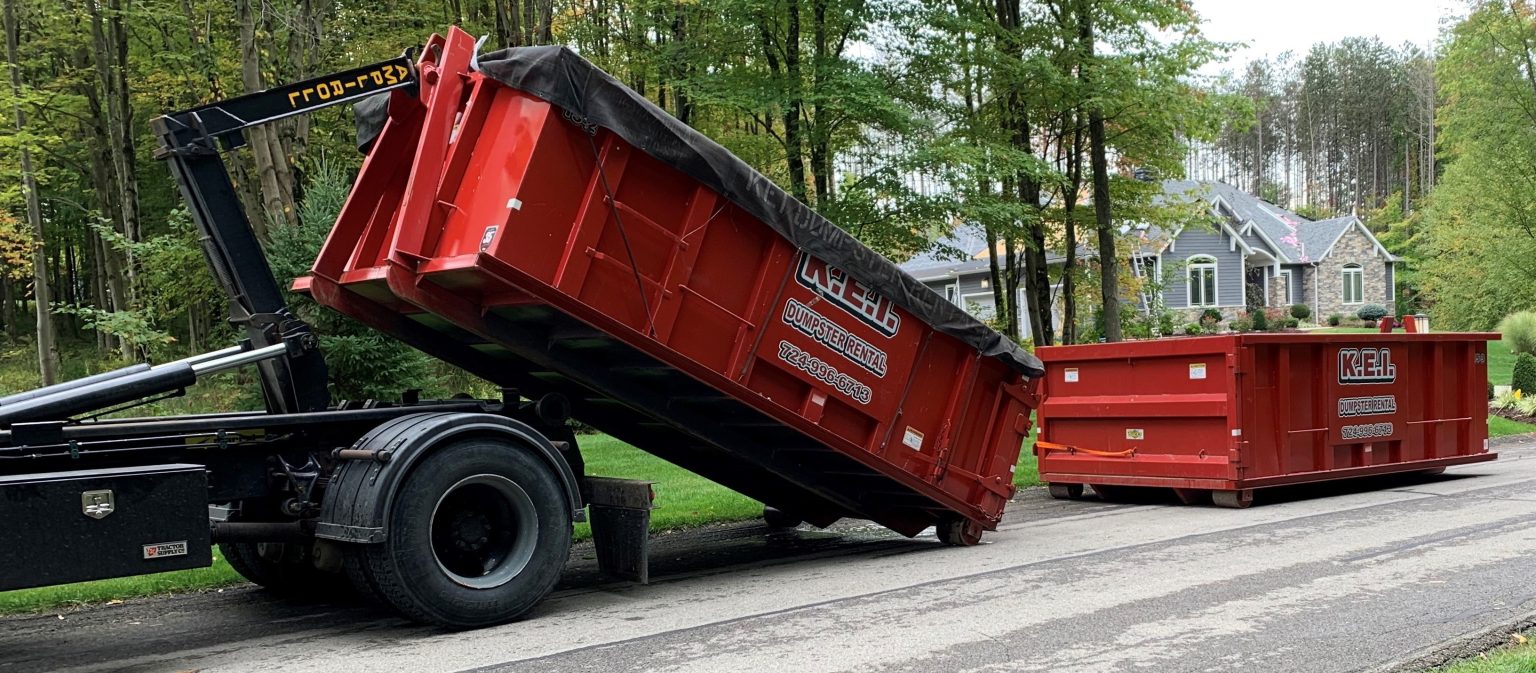
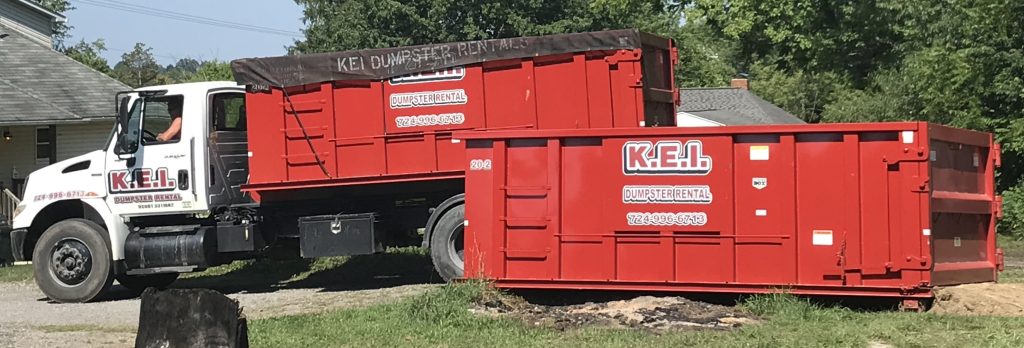
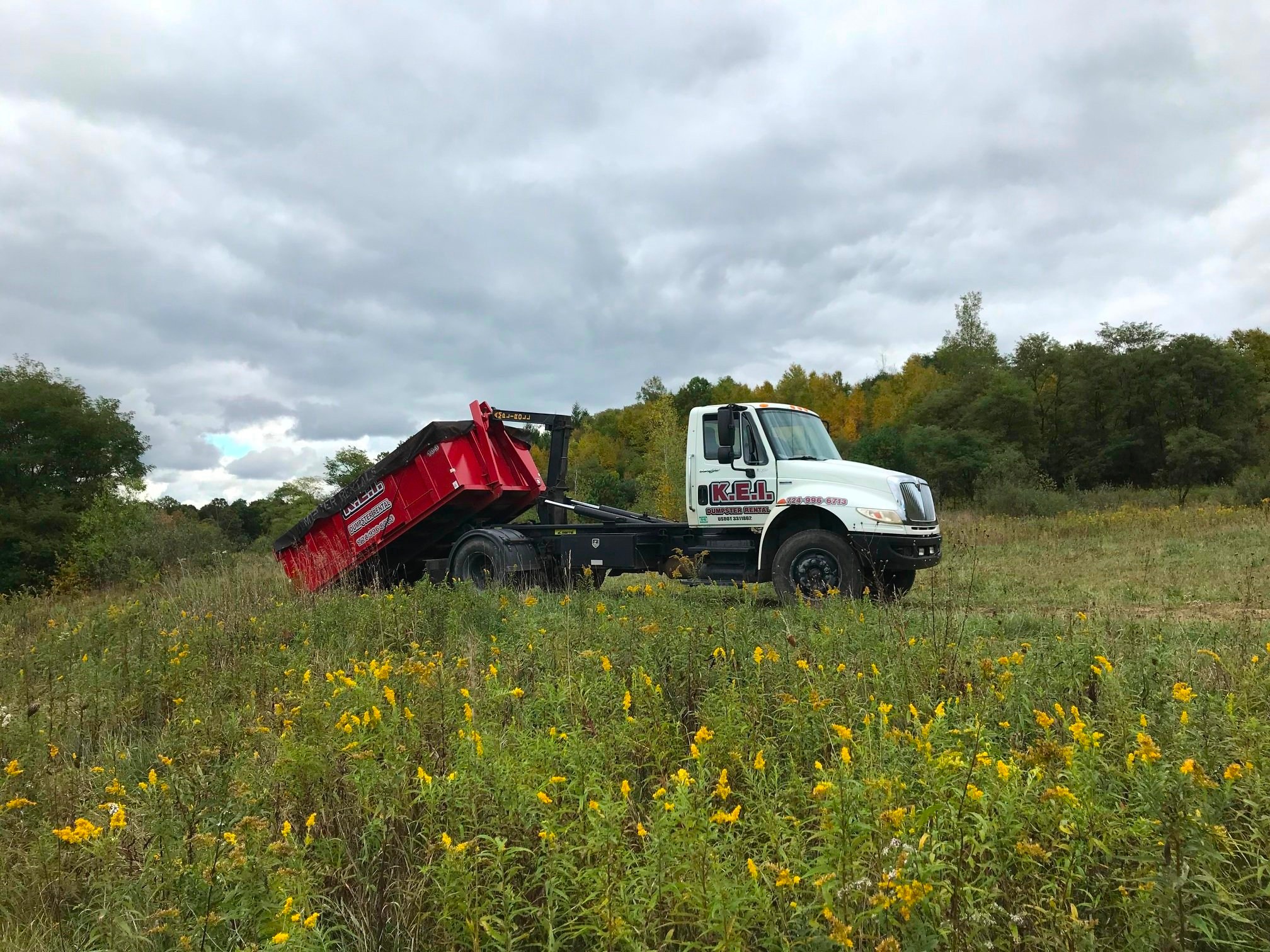
A KEI delivery truck drops off different dumpster sizes for a construction site in Butler County.

What are the proper loading techniques for commercial dumpsters?

One of the smartest things you can do to maximize your commercial dumpster space is to master proper loading techniques. You don’t have to earn a degree in waste management disposal to use these tips and tricks to make the most of your available dumpster space.

  • Break down large items. Disassemble bulky items when possible. Removing legs from furniture allows you to lay the items flat and pile other debris on top.
  • Flatten materials. Compacting or crushing items like packing materials, plastic containers, and metal sheets removes air pockets in your dumpster.
  • Fill the void. Avoid leaving empty spaces or gaps in the dumpster. Fill void areas with smaller items or compactible materials.
  • Stack items strategically. Arrange materials in a way that maximizes the vertical space in your dumpster. Placing bulky or heavy items at the base as a foundation. Then, stack lighter or crushable materials on top to provide stability and avoid safety hazards.
  • Load from the back. Using a back-to-front loading method provides better organization and allows for easier unloading at the disposal site.
  • Keep waste level. Avoid piling waste significantly above the top edges or creating unbalanced loads to ensure safe transport and disposal.
  • Avoid overloading. If you exceed the weight limit on your dumpster, the rental company can’t remove it from your commercial project site safely. If you find you need more space, call your dumpster rental service immediately to discuss options.
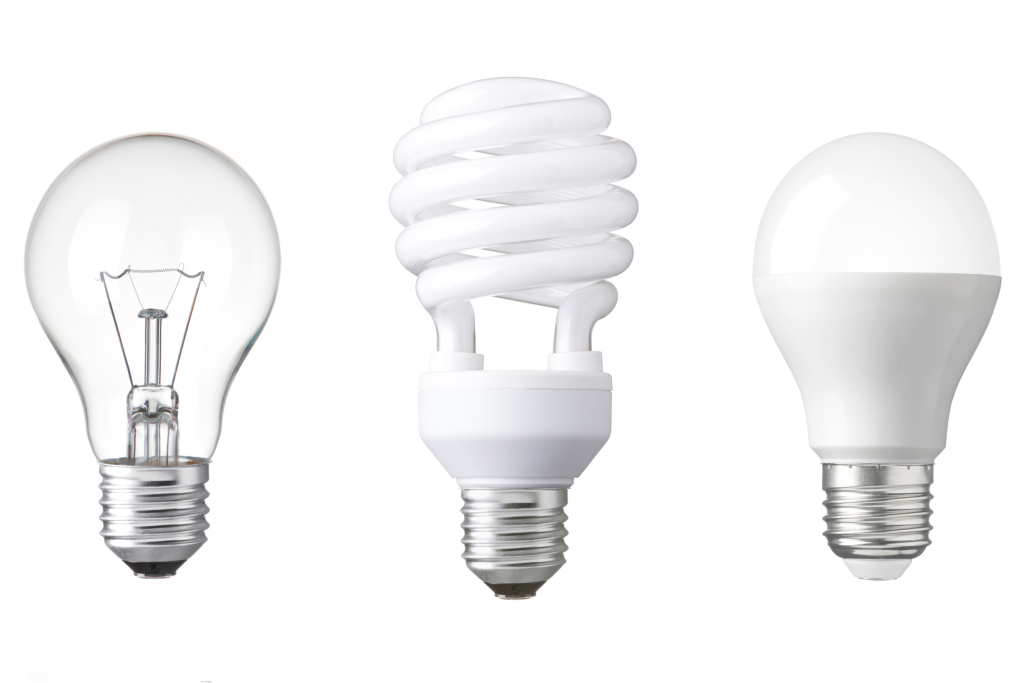
Three different kinds of lightbulbs are lined up next to one other.

Should you dispose of recyclable materials in commercial dumpsters?

Tossing recyclable materials into your commercial roll-off dumpster wastes valuable space. A better strategy is to work with your roll-off dumpster rental company to dispose of recyclables in a more efficient manner, saving plenty of space for debris, trash, and other waste materials in the dumpster.

Some examples of items that are recyclable and shouldn’t go in your dumpster include:

  • Construction materials. Some types of building materials can be recycled, including wood, metal, concrete, asphalt, bricks, and roofing materials. You may even make a few bucks recycling these materials to companies that repurpose or process them into new items.
  • Metal scraps. Metal sheets, scraps, steel beams, pipes, and wires can be melted down and reused in manufacturing.
  • Glass surfaces. Windows, panels, and other glass materials from commercial projects can be recycled if they’re clean and free of any contaminants.
  • Electronic waste. Old computers, monitors, printers, and other e-waste can be recycled. Look for authorized e-waste recycling centers or check with your roll-off dumpster rental service to inquire if they have recommendations for recycling opportunities.
  • Scrap wood. Any leftover or discarded wood from construction or renovation projects can be recycled or repurposed. Some of the new uses for it include biomass energy production, mulch, and reprocessing into new wood products.
  • Light bulbs. Fluorescent bulbs and other types of light bulbs contain hazardous materials and should never be tossed in your commercial dumpster. Recycle them at designated collection points to ensure proper disposal instead.

Get the most out of your commercial dumpster

Guessing dumpster sizes for your next commercial project is a disaster waiting to happen. Considering the types of waste and the best loading strategies helps you get the most out of your commercial dumpster.

Give us a call today to discuss your needs. One of our team members can help you choose the best size to get the job done.
7 FAQs About Commercial Dumpster Sizes

2 dumpsters 2 scaled

Dumpster sizes matter when renting for a commercial business. The capacity you choose depends on why you need a roll-off dumpster rental.

Commercial clean-outs and renovations are just two of the reasons why businesses may find themselves needing to dispose of debris and extra junk not suitable for their regular trash pickup day.

Before you reach out to order a dumpster, review these 7 frequently asked questions about commercial dumpster rental services. We talk about available dumpster sizes and other facts you need to know to choose the best option.

In this blog, you can learn:

Pictured from left to right and top to bottom are the 4 dumpster sizes available from KEI Dumpster Rental.

What are the available commercial dumpster sizes?

Commercial dumpster sizes vary depending on which dumpster rental service you use. At KEI Dumpster Rental, we recommend two options for our commercial customers. We have smaller sizes, but they generally are not capable of handling the capacity our commercial customers require.

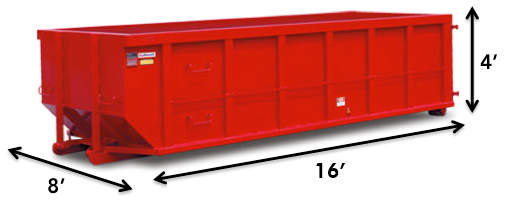
  • 20-yard containers are 16 feet long, 4 feet high, and 8 feet wide. They hold up to 3 tons of material. Commercial and industrial sites find this size useful for most jobs that require debris removal.
  • 25-yard containers are 16 feet long, 6.16 feet high, and 8 feet wide. They hold up to 3.5 tons of material. Large construction and industrial sites find this size appropriate for accommodating most debris and other waste removal needs.

If you’re not sure which size works best for your needs, ask one of our associates when you call to schedule delivery. We can right-size your rental dumpster. You never pay for more than you need or choose a dumpster that’s too small to accommodate your debris and other waste.

A construction site foreman and worker wearing white hard hats stand next to one another reviewing plans for a new housing development. A partially-constructed building is in the background.

What types of businesses benefit from commercial dumpster rentals?

Commercial roll-off dumpster rentals are a critical component of operations for industries that frequently generate significant waste.

Construction and renovation companies produce different types of waste. Old drywall, insulation, scrap metals, and concrete blocks are common on their work sites. None of these materials can go into regular dumpsters for curbside trash removal.

Manufacturing and industrial facilities produce large volumes of waste. Production scraps, packaging materials, and other byproducts require proper management.

These commercial businesses enjoy several benefits of renting a roll-off dumpster:

  • Enhanced reputation and customer satisfaction. Effective waste management contributes to a positive image and showcases their commitment to the environment by disposing of debris properly.
  • Guaranteed compliance with municipal, state, and federal regulations. Commercial customers who use a reputable roll-off dumpster rental service meet all regulations regarding waste disposal, recycling, and environmental protection.
  • Commitment to the cleanliness of work sites. Dumpster rentals provide a centralized and efficient waste disposal solution. Without them, waste can pile up on your work site quickly, creating an unsafe – and unsightly – work environment.

How long can you rent a commercial dumpster?

At KEI, our standard roll-off dumpster rental period is 7 days. We drop off the dumpster at your desired location and return after the 7 days are up to retrieve it.

If you need to keep your rental dumpster longer or want to have ongoing delivery and retrieval service, let us know when you call to reserve your dumpster.

Some commercial customers find it convenient to arrange regular services. They choose the dumpster sizes needed to accommodate their waste, then schedule a pickup and retrieval schedule that works for both parties.

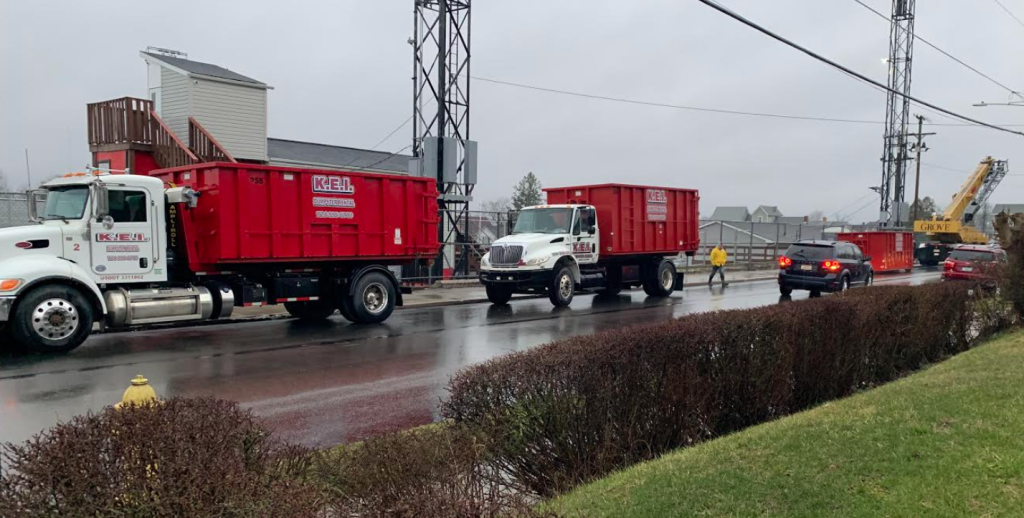
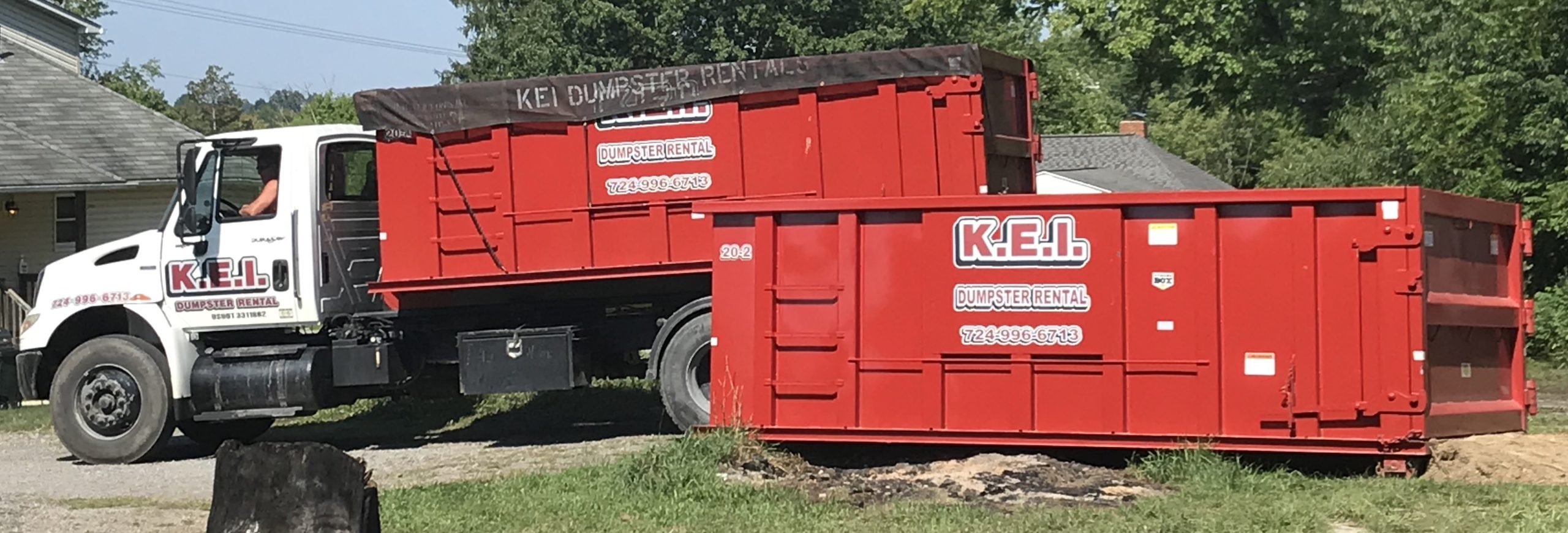
A fleet of KEI trucks delivers roll-off dumpsters in various sizes to a construction site in Butler County.

Can a commercial dumpster be emptied and returned during the rental period?

Some roll-off dumpster rental companies offer ongoing service that replaces full containers with fresh ones according to a pre-determined schedule. Construction companies and industrial manufacturers find this option attractive because of the sheer amount of debris and other waste they produce daily.

When calling to inquire about renting a high-capacity roll-off dumpster, be sure to mention you want this option to see if the dumpster service offers it.

Are there any restrictions on what can be put in a commercial dumpster?

Pennsylvania has strict guidelines on what can go in rental roll-off dumpsters. The following items are banned or restricted for collection:

  • Batteries.
  • E-waste items (computers, monitors, printers).
  • Freon-containing appliances (air conditioners, freezers, refrigerators).
  • Gasoline, oil, and other liquids.
  • Hazardous waste.
  • Paints.
  • Televisions.
  • Tires.

If you’re not sure whether a material you need to dispose of is appropriate for a roll-off commercial dumpster, check with the company you plan to rent from to verify before placing your order.

How does the dumpster rental process work for commercial customers?

Commercial customers find it easy to rent roll-off dumpsters when they call KEI. Our removal specialists help you choose the dumpster sizes you need while making the process convenient and painless.

Here’s how it works:

  • Choose a delivery size and location. You tell us what size you want and where you want us to leave it.
  • Prepare your site for a dumpster delivery. Remove any low-hanging obstacles, materials, or vehicles to make room for your dumpsters. Some municipalities require special permitting for dumpsters. Make sure yours isn’t one of them.
  • Load your dumpsters. Put large items in first to keep the weight distribution even. Never overload your dumpster. If your materials don’t fit, it’s a sign you need a bigger dumpster or ongoing pickup and delivery services.
  • Schedule pickup. We’ll automatically retrieve our dumpsters after 7 days unless you’ve made other arrangements.

How much does it cost to rent a dumpster for commercial use?

How much it costs to rent a dumpster for commercial use depends on the size of the dumpster you request and the duration of the project.

Request a quote from KEI to estimate the cost. We’ll need to know the size of dumpsters you need, how many you need, and whether it’s a one-time rental or an ongoing service to provide accurate pricing.

Dumpster Sizes: A Step-by-Step Guide to Choosing

dumpsters exchange 2 1536x673 1

Dumpster sizes are not something you think about until you find you need to rent one for a construction project, renovation, or decluttering.

You don’t want to get one that’s too small to meet your needs because you’ll end up spending more money carting the excess items back and forth to the local dump yourself.

Getting one that’s too large wastes money in a different way.

Efficient waste disposal saves you time and money and ensures a hassle-free project. In this comprehensive guide, we provide a step-by-step guide on how to right-size your roll-off dumpster rental to get the most bang for your buck.

In it, we discuss:

What is a roll-off dumpster?

A roll-off dumpster is a large, rectangular container designed for the removal of excess waste from clean-outs, construction projects, and renovations. They’re commonly used by businesses and individuals who have a significant amount of debris and other waste to remove from a site safely and efficiently.

Dumpster sizes vary depending on which dumpster rental service you choose. Most range from 10 to 40 cubic yards. They come with an open top, making it easier to toss in construction materials, debris, furniture, and other large items.

Advantages of roll-off dumpsters

One of the key benefits of roll-off dumpsters is their versatility. They accommodate different types of rubbish, including construction debris, household items, and yard waste.

Dumpster rental services deliver your selected dumpster sizes direct to your doorstep (or wherever location you request) and pick them up when you’re finished.

Pictured from left to right and top to bottom are the 4 dumpster sizes available from KEI Dumpster Rental.

What are the different dumpster sizes?

Available dumpster sizes depend on the roll-off dumpster rental company you choose. At KEI, we offer four convenient sizes designed to accommodate a variety of disposal needs.

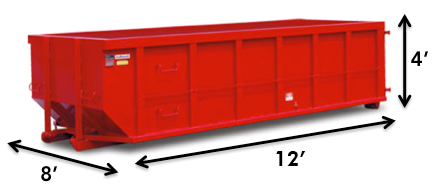
  • 10-yard containers are 12 feet long, 4 feet high, and 8 feet wide. They hold up to 2 tons of material and are ideal for attic or basement cleanouts, small remodeling projects, and landscape debris.
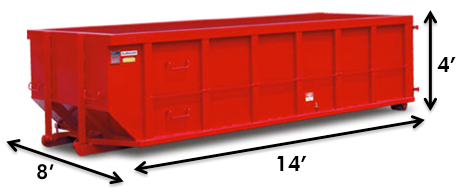
  • 15-yard containers are 14 feet long, 4 feet high, and 8 feet wide. They hold 2.5 tons of material and are ideal for decluttering, apartment cleanouts, small remodeling or construction projects, and yard debris.
  • 20-yard containers are 16 feet long, 4 feet high, and 8 feet wide. They hold 3 tons of material and are ideal for new construction, large residential remodeling projects, and industrial sites.
  • 25-yard containers are 16 feet long, 6.16 feet high, and 8 feet wide. They hold 3.5 tons of material and work well for large construction sites, large house remodeling projects, and industrial sites.

If you’re not sure what size you need, talk to one of the team members at KEI when ordering. They can recommend the perfect dumpster sizes to meet your needs.

A kitchen in the middle of a renovation project, with new cabinets being installed. Dumpster sizes matter when using them to collect debris for home renovations.
Large home renovation projects may require a slightly larger roll-off dumpster to accommodate the debris and other materials.

What factors should you consider when choosing dumpster sizes?

You don’t have to play guessing games to get the right size dumpster for your project. When choosing a roll-off dumpster size, consider the following factors to ensure you select the appropriate option.

  1. Project type and size
    Size matters. At least when it comes to the dumpster you choose for your project. Consider what you plan to do with the dumpster once you have it. Are you using it for a whole-house cleanout or a large construction project? If so, a 20- or 25-yard dumpster is your best bet.

  2. Amount and type of waste
    Estimate the volume of waste your project might produce, keeping in mind that different materials have different densities. Construction debris, for example, is bulky and heavy. It may require a larger dumpster size.

  3. Available space
    How much space do you have on-site for the dumpster? Is there ample room for the hydraulic truck that delivers and retrieves it? Make sure you have enough room to accommodate both before ordering. Never block a public space like a sidewalk or roadway. Also, keep in mind that some municipalities require a permit for dumpsters if they may encroach on a public space.

  4. Project duration
    How long do you expect your project to last? If you’re doing a yard cleanup or decluttering, you probably can get by with a dumpster for just a few days. Small renovation projects might require a longer-term rental.

  5. Weight restrictions
    Dumpsters come with weight restrictions. Make sure you don’t overload them because it makes it unsafe for the dumpster rental company to haul them away. If you think you don’t have enough room to accommodate all your debris or other waste, reach out to the rental company and arrange for a second dumpster or to have the current one emptied and returned for further use.

  6. Budget considerations
    Larger dumpsters cost more. Make sure you balance your budget with the appropriate dumpster size to ensure cost-effectiveness without compromising on waste management efficiency.

What are the advantages and disadvantages of different dumpster sizes?

Different dumpster sizes have their advantages and disadvantages depending on your specific needs and the requirements of your project. Let’s break down the pros and cons by dumpster size so you have a complete picture before choosing the one that works best for you.

Small Dumpster Sizes – 10- to 15-yards

Small dumpster sizes accommodate most small clean-out projects or remodeling projects for your home or business.

Among the advantages:

  • Cost-effectiveness. Smaller dumpsters generally cost less than their larger counterparts.
  • Space-saving. Small dumpsters work best for projects with limited space. They easily fit into driveways and smaller areas.

Among the disadvantages:

  • Limited capacity. One of the reasons smaller dumpsters fit into smaller spaces – a plus – is because they have lower capacity. They’re not recommended for projects that might produce significant waste.
  • Frequent disposal. If you choose a smaller size accidentally, you might need to have it changed out more frequently if you have more waste than it can accommodate. This costs you more money in the long run.

Medium dumpster sizes – 20- to 25-yards

Medium dumpster sizes are best suited to larger cleanouts, new construction, and some industrial sites.

Among the advantages:

  • Suitable for various materials. They can handle different types of waste, including construction debris, household items, and bulky furniture.
  • Versatile. They strike a balance between capacity and maneuverability, accommodating a larger range of projects, including renovations and construction.

Among the disadvantages:

  • Higher rental costs. Compared with smaller dumpsters, they cost more due to increased capacity.
  • Space requirements. They require more space for delivery, placement, and pick-up, making them unsuitable for some sites.

Large dumpster sizes – 30- to 40-yards

Most residential customers don’t require a large dumpster size unless they are undertaking a whole-house renovation project. Commercial customers may need them for remodeling or construction. Industrial sites may need them due to the sheer volume of debris they produce.

Among their advantages:

  • Efficiency. Large dumpsters make quick work of heavy materials like concrete, bricks, and roofing materials.
  • Reduced pick-up frequency. With their larger capacity, they can hold a significant amount of waste, reducing the need for frequent change-outs with the dumpster rental service.

Among their disadvantages:

  • Higher rental costs. Large dumpsters aren’t cheap. Unless you truly need the extra size and durability they provide, it’s probably not worth the expense.
  • Placement challenges. You’ll need ample space to accommodate a dumpster this large, making them unsuitable for tight spaces or properties with limited access to the delivery truck.
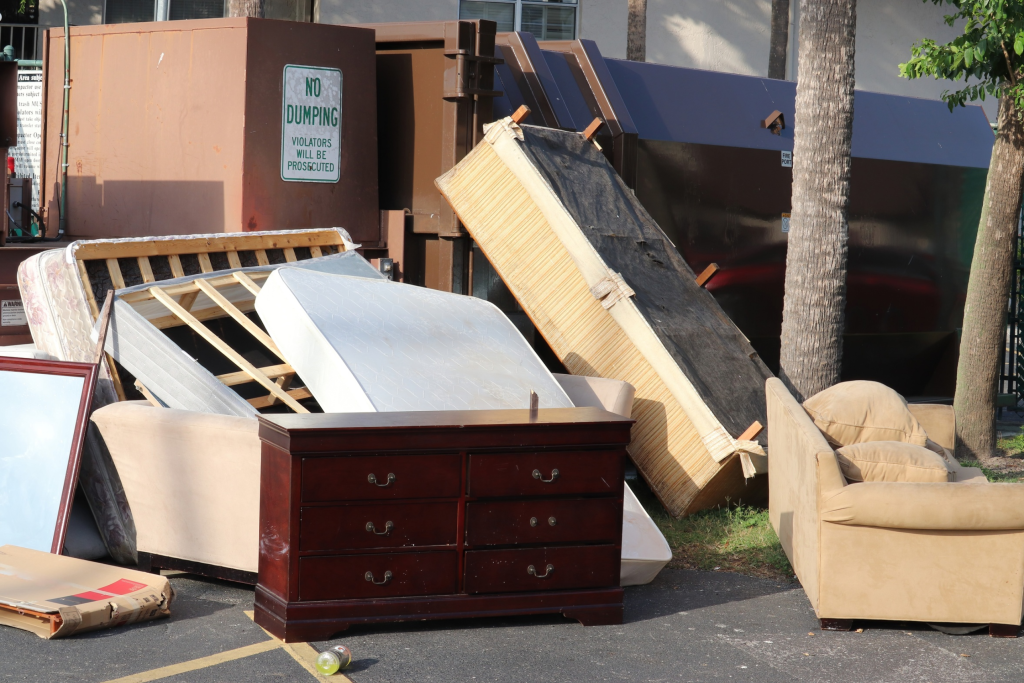
Large items like a dresser, mattresses, a couch, and bedframe lay on the street waiting to be loaded into a roll-off dumpster. Loading bulky items first is best when choosing dumpster sizes to accommodate.
Load large and bulky items first to maximize the available space in your roll-off dumpster.

What are some tips for optimizing roll-off dumpster space?

Optimizing the space in a roll-off dumpster helps you maximize its capacity and make the most of your waste management efforts.

Consider the following factors to help you get the most out of the dumpster size you choose for your project.

  1. Load heavy materials first
    Loading heavy materials first ensures they settle and make room for other debris and waste. It also helps maintain stability during transport and ensures compliance with weight limits or regulations.

  2. Break down large items
    Disassemble large items whenever possible or break them into smaller pieces. Doing so creates more space and allows for better use of the available dumpster capacity.

  3. Compact and flatten materials
    Compacting items like cardboard boxes, plastic containers, and other compressible materials significantly reduces the volume they occupy inside the dumpster.

Dumpster sizes done right

Understanding dumpster sizes helps you get the most out of your roll-off dumpster rental. Considering the advantages and disadvantages of each size, then matching their capacity to your project, is the most effective way to ensure a positive experience.

Still not sure what size to select? Give us a call at 724-996-6713 and a member of our team is happy to assist!  

Dumpster Rental Services vs. Junk Removal Services

Dumpster Rental Services v Junk Removal Services main

Dumpster rental services and junk removal services may sound similar, but there are key differences between them. Both are popular options. However, one may be better suited to your waste management needs than the other.

Choosing the right option depends on factors such as project size, duration, and budget. In this blog, we’ll explore some of the common questions asked about both services, including:

What are dumpster rental services?

Dumpster rental services provide roll-off dumpsters of various sizes for commercial and residential waste management assistance. You can use them for garage or basement clean-outs or hauling away construction debris from a remodeling project.

Roll-off dumpsters are larger than the standard dumpsters found at apartment complexes and local businesses. Their rectangular shape and open tops make them convenient for tossing unwanted items without hauling them to the dump yourself.

Most roll-off dumpster rental companies offer door-to-door delivery of the size of bin(s) requested. KEI Dumpster Rental is among the companies that deliver on-site. Our crew returns to collect the full dumpster.

A KEI dumpster rental services truck delivers to roll-off dumpsters to a customer.
Dumpster rental services are ideal for commercial and residential clean-outs or construction projects with ongoing waste and debris-removal needs.

What are the pros and cons of using dumpster rental services?

The number one reason most people use dumpster rental services is convenience. You can choose the size of roll-off dumpster that best accommodates your needs and have it delivered to any location.

Having a dumpster on site allows you to dispose of waste at your own pace. It also gives you control over the loading process, organizing items as needed to ensure you don’t unintentionally toss out anything important.

Other benefits include:

  • Flexible rental periods. Most dumpster rental services let you choose between short-term and long-term options. KEI’s standard rental is 7 days. If you finish before the 7 days are up, just give us a call and we’ll remove it.
  • Cost-effective. Renting a dumpster is more affordable than other waste removal options. It eliminates the need for multiple trips to the landfill or paying for on-site workers to load up the junk for you.
  • Suitable for large projects. If you’re undertaking a project that generates a lot of debris or waste, dumpster rental services are the best option. Construction sites, home renovation projects, and large-scale clean-outs benefit from having a dumpster on-site to efficiently manage the waste.
  • Environmentally-friendly. Dumpster rental services follow local regulations for disposing of debris and unwanted junk to reduce the environmental impact.

There are a few disadvantages to renting a roll-off dumpster. One of the biggest reasons people shy away from them is the physical labor required for loading waste themselves. Anyone with physical limitations may find it difficult to toss bulky items into the bin.

The other consideration is space. You must have adequate space for an on-site dumpster to prevent it from blocking access to public spaces like sidewalks and streets.

What materials can you put in a dumpster?

Rental dumpsters accommodate a variety of debris and waste. Among the most popular uses for them are commercial or residential clean-outs. Safely toss in household junk, construction debris, large furniture – even yard waste.

Items you should avoid putting in your roll-off dumpster rental include:

  • Batteries.
  • E-waste items (computers, monitors, printers).
  • Freon-containing appliances.
  • Gasoline, oil, and other hazardous liquids.
  • Hazardous waste.
  • Items with corrosive/explosive components.
  • Paints.
  • Televisions.
  • Tires.

If you’re not sure whether an item is suitable for your dumpster, reach out to the dumpster rental company to ask.

A roll-off dumpster from KEI dumpster rental services sits curbside at a customer location.
KEI delivers roll-off dumpsters directly to your site for convenience.

How are dumpster rental services provided?

Dumpster rental services are provided by companies that specialize in on-site waste management solutions. Choosing the correct size dumpster to meet your needs is important. Consult with a dumpster rental services provider who can assist if you’re confused about which size you need.

Once you’ve selected the size dumpster you need, pick a delivery date and location. You’ll need enough room to accommodate the dumpster, plus allow the delivery truck ample room to load and unload the bin.

Dumpster rental services pick up the full bin per the agreed-upon schedule. Never overfill your dumpster. Make sure all materials are below the top of the side walls for safe transport. You don’t want any of the debris flying out of the dumpster during hauling, which compromises the safety of the driver and others around them.

A worker from a junk removal service company checks the work order to ensure they've picked up all items.
A junk removal service company may be the best fit for moving a small load of unwanted items, such as old furniture or appliances.

What are junk removal services?

Junk removal services provide one-time assistance for the immediate removal of unwanted junk. Large appliances, furniture, and other heavy objects are difficult for some people to move on their own. Renting a roll-off dumpster may not be suitable in these instances unless the person has help getting their items into the bin.

People who prefer a hands-off approach or lack the resources to remove the junk themselves may instead turn to a junk removal service provider.

What are the pros and cons of using junk removal services?

One of the biggest benefits of a junk removal service is that someone else does the work for you. If you have limited mobility or other physical or time constraints that prevent you from removing junk yourself, hiring a junk removal service is a reasonable alternative.

Another advantage of using a junk removal service is it saves you time. If you’ve been putting off decluttering a space because of time constraints, paying someone else to do the work is a plus.

One disadvantage to junk removal services is the cost. Because you’ve hired labor to do the loading work for you, the price can be higher than having a roll-off dumpster on-site.

Labor isn’t the only factor that affects pricing. Most junk removal services charge by the amount of junk you’re removing. That might be OK if you have one or two items to dispose of, but it can get pricey for clean-outs or construction projects.

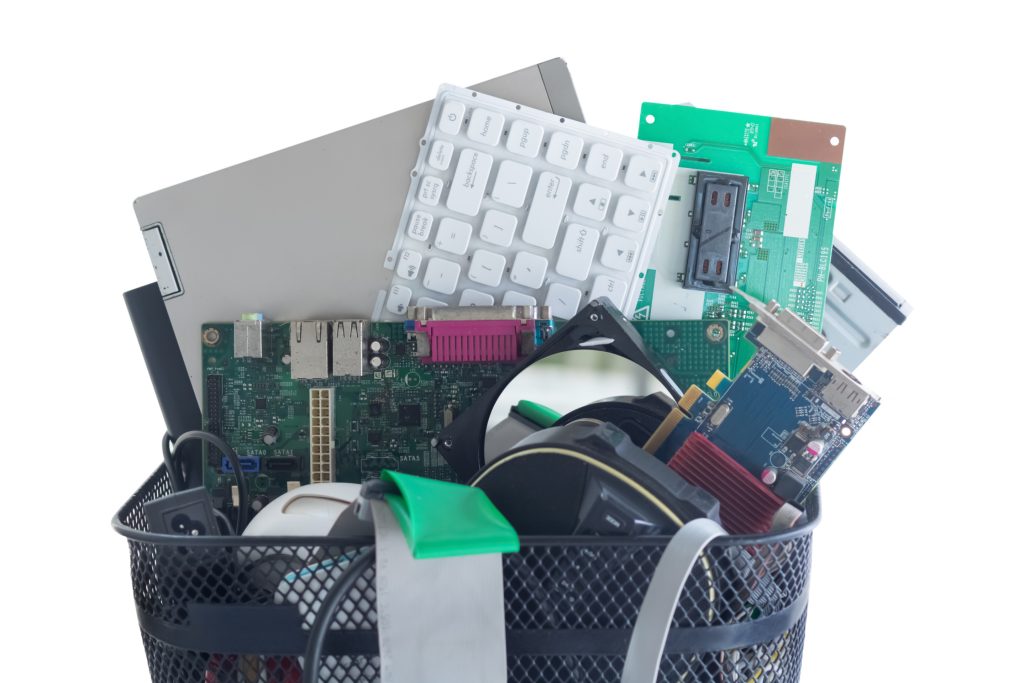
A basket filled with electronic waste items like computer parts, keyboards, and other e-waste that can't be thrown in the regular trash.
Junk removal services take e-waste items like computers and mobile devices.

What materials do junk removal services take?

Junk removal services take most of the same waste materials as dumpster rental services companies. Additionally, many haul away e-waste products like old computers or TVs and either recycle them or dispose of them according to local, state, and federal guidelines to protect the environment.

Like dumpster rental companies, junk removal services have limits on what they’ll remove from your commercial or residential property. Among the items they may refuse:

  • Ammunition
  • Asbestos
  • Fluorescent light bulbs
  • Fuel
  • Household cleaners
  • Medical waste
  • Oils
  • Pharmaceuticals
  • Paint
  • Pesticides
  • Pressurized containers

How are junk removal services provided?

Junk removal services are one-day projects. Usually, you schedule a time for pick up and their workers arrive, remove the designated items, and haul them from the scene.

Most junk removal companies use small trucks and a 2-person crew to collect items from your commercial or residential property. The less stuff you must move, the smoother the process goes.

If you have an ongoing project that produces debris or other waste, using a roll-off dumpster rental company is a better fit. You can keep the dumpster as long as needed.

A woman with a thought bubble next to her that says "dumpster rental services or junk removal services" as she thinks about which is more appropriate for her needs.
Consider budget, physical constraints, and project size and duration when choosing between dumpster rental services and junk removal services.

How do you choose the right option?

Choosing between dumpster rental services and a junk hauler doesn’t have to be difficult when you consider several factors in your decision. Your budget, labor and physical capabilities, and project size and duration all play a role in making an informed choice.

Budget constraints

For most people, budget plays a significant role in choosing between on-site dumpster rental services and a one-day junk removal service. Dumpster rental services involve a flat fee, which is more cost-effective for long-term projects. Your estimate includes delivery, pick-up, and disposal fees so you’re not surprised by unexpected charges.

Junk removal services charge based on the volume or weight of items. Add-on costs vary, which can make it difficult to predict your total costs for using this option.

Labor and physical capabilities

Dumpster rental services require you to handle the physical labor involved with loading your waste. If you have physical limitations or lack the time required to do the work yourself, using a junk removal service may be a better fit.

Project size and duration

Large projects that generate a significant amount of waste over an extended period are best served by a roll-off dumpster from a local dumpster rental service. Commercial and residential renovations or prolonged clean-outs make renting a dumpster more suitable for the task.

If you have one-time clean-outs or smaller projects like large furniture removal, a junk hauler is a better fit.

Making the right choice

Knowing the differences and similarities between dumpster rental services and junk removal services helps you make the right choice for the job at hand. Make sure you weigh the pros and cons of each type of waste removal. Don’t forget to consider your budget, labor and physical capabilities, and project size and duration.

If you’re still unsure which model best fits your needs, talk with the team at KEI Dumpster Rental. We’ll review what items you need to remove from your site and help you choose which service to use.

Dumpster Rental Services 101: Dumpster Sizes

299433406 453801806761501 6246986778104818546 n

Not all dumpster rental services are created equally. They vary in their terms of services, the quality of their customer service, their pricing, and the dumpster sizes they have available.

Choosing the wrong size dumpster can end up costing you more money in the long run. If you have more debris and other junk to remove from your site than can reasonably fit in the dumpster, you’ll end up paying additional fees for removal and return services. Worse yet, you may end up hauling the overage yourself to the local dump.

Dumpster rental services with exceptional customer service help you choose which size dumpster best suits your needs. Before you talk with a customer service representative, review some of the most common questions about dumpster rentals:

  • What are the most common dumpster sizes?
  • How do you choose the right dumpster size for your project?
  • What is the cost of renting a dumpster?
  • What items can you put in a rental dumpster?
  • How do you prepare for a dumpster delivery?

What are the most common dumpster sizes?

Most dumpster rental services offer more than one size of roll-off dumpster for commercial and residential purposes. Ideally, you want to select the size that best suits the type and quantity of debris you expect from your project.

The smallest size roll-off dumpster you can rent is 10 yards. The largest is 40 yards. Not all companies carry the largest sizes. Check with the dumpster rental services company you plan to use to make sure they carry your desired size.

Choosing the right size roll-off dumpster

KEI offers customers 4 sizes of roll-off dumpsters. Here’s how much debris you can fit in each of them to help you make the right choice.

  • 10-yard containers are 12 feet long, 4 feet high, 8 feet wide, and can hold approximately 2 tons of material.
  • 15-yard containers are 14 feet long, 4 feet high, 8 feet wide, and can hold approximately 2.5 tons of material.
  • 20-yard containers are 16 feet long, 4 feet high, 8 feet wide, and can hold approximately 3 tons of material.
  • 25-yard containers are 16 feet long, 6.16 feet high, 8 feet wide, and can hold approximately 3.5 tons of material.
Four red dumpsters from KEI dumpster rental services, each with arrows showing the specific dimensions.

How do you choose the right dumpster size for your project?

Choosing the right dumpster size for your project doesn’t have to be difficult. Considering specific factors when deciding what size roll-off dumpster to order ensures cost-effective results.

Review the sizes available and then compare them to the following factors.

  • Budget. The bigger the dumpster, the more it costs. It’s important not to get more dumpster than you need for this reason if your budget is tight. 
  • Project duration. Longer projects tend to generate more waste. You have options in this scenario. Rent the largest dumpster you can fit on-site. You also can arrange for the dumpster rental services provider to pick up the dumpster once it’s full and return an empty one in its place.
  • Space constraints. Larger dumpsters might not be feasible if you’re working with limited space. Blocking public access to streets and sidewalks isn’t permissible in most communities, so you’ll want to choose a dumpster size that fits your property.
  • Type and amount of waste. Bulky items like furniture and construction debris take up a lot of space in a dumpster. You may need the largest size available or rent more than one dumpster to accommodate your needs.
  • Weight restrictions. Dumpster rental services have weight limits on their dumpsters. If you overfill it, it costs them more to transport it safely. Avoid overage fees by selecting the right size dumpster.

What is the cost of renting a dumpster?

The cost of renting a dumpster depends on the size you request and the length of your project. Another factor is the type and amount of debris and other junk you plan to put in the dumpster. As a rule, the larger the dumpster the higher the price. 

Most dumpster rental services provide an estimate before delivering a roll-off dumpster to your requested location. Here are some tips to help you right-size your dumpster rental to ensure the lowest costs:

Book in advance. Some dumpster rental services offer discounts for bookings made weeks or months in advance.

Spring and summer are the most popular times for renting a dumpster. Choose an off-peak time for your project to enjoy price incentives from dumpster rental services.

A full KEI dumpster rental services dumpster sits on location at a home.
Not all items are suitable for rental dumpsters. Check with your dumpster rental services provider to make sure they can accommodate your needs.

What items can you put in a rental dumpster?

You can put construction debris, large household items, and even yard waste in a rental dumpster. It’s important not to overload your dumpster or put prohibited items in it.

Some examples of items you can’t toss into your dumpster include:

  • Batteries.
  • E-waste items (computers, monitors, printers).
  • Freon-containing appliances.
  • Gasoline, oil, and other hazardous liquids.
  • Hazardous waste.
  • Items with corrosive or explosive components.
  • Paints.
  • Televisions.
  • Tires.

Every dumpster comes with a maximum weight restriction. Make sure you don’t exceed it, or you can end up paying more at pickup time.

If you’re not sure whether an item is suitable for your dumpster, reach out to your dumpster rental services provider to ask.

A red dumpster full of debris from KEI dumpster rental services sits in the driveway of a home. The homeowner placed wooden skids under the dumpster to protect the driveway from damage.
Placing wood pallets o skids under the rental dumpster protects your driveway and other hard surfaces.

How do you prepare for a dumpster delivery?

Before your dumpster arrives, you must follow a few steps to prepare for delivery.

Choosing a suitable location is the most important part of the process.  The spot must be level and provide enough space for the delivery truck to drop it off and pick it up. Make sure it’s not obstructing any public access to sidewalks or streets.

Other key steps include:

  • Clear away obstacles – debris, parked cars, tree branches – that can prevent the delivery truck from accessing the site.
  • Get necessary permits from your local municipality or government agency that oversees waste removal. Depending on your location and the type of waste you’ll be tossing out, you may need a permit. Secure them well in advance of dumpster delivery.
  • Prepare the site by placing plywood or other protective materials on driveways and other hard surfaces. Consider marking off the area where you want the dumpster to help the delivery driver locate it more easily, especially if you won’t be on-site during the scheduled delivery time.

Don’t hesitate to reach out to the dumpster delivery services provider with any questions. It’s in everyone’s best interest to have the details worked out before your dumpster arrives.

Dumpster rental services to meet your needs

It doesn’t matter why you need a dumpster. All that matters is choosing the right size to accommodate your needs and working with a dumpster rental services provider that offers exceptional customer service.

Roll-Off Dumpster Rental Guide: What to Know Before You Rent

dumpster full 2
KEI Dumpster Rental Guide

Roll-Off Dumpster Rental Guide: What to Know Before You Rent

If you have a home cleanout, remodeling project, roofing job or construction project coming up, a roll-off dumpster gives you one place to put debris as the work moves along.

The rental itself is pretty straightforward, but choosing the right size, deciding where the dumpster will go and knowing what can be placed inside are all worth figuring out before delivery day.

KEI Dumpster Rental provides roll-off dumpsters for residential, contractor and commercial projects throughout Butler County and surrounding areas of Western Pennsylvania. We currently offer 10, 15, 20, 25 and 30-yard dumpsters.

This guide covers the questions customers commonly need to think about before renting a dumpster.

Residential, Contractor & Commercial 5 Dumpster Sizes Butler County & Western PA
dumpster full 2
5 Sizes10–30 Yard Dumpsters
7 DaysStandard Rental Period
ResidentialContractor & Commercial
Butler County& Western PA
Chicora, PALocal Service
How It Works

How Does Roll-Off Dumpster Rental Work?

Most rentals follow a simple process.

1

Tell KEI About Your Project

First, tell KEI what kind of project you’re working on and what you expect to throw away. That information helps determine which dumpster size makes sense.

2

Choose Date & Location

Next, choose a delivery date and a suitable location for the container. The delivery truck needs enough room to reach the placement area and safely set the dumpster down.

3

Load Approved Debris

Once the dumpster is delivered, you can load approved debris as the project progresses. Materials should stay within the container and should not extend above the top of the dumpster.

4

Pickup & Haul-Away

When you’re finished, the dumpster is picked up and hauled away. KEI’s standard rental period is seven days, with earlier pickup or additional rental time available by arrangement.

Dumpster rental services company KEI delivers a roll-off dumpster to a customer and leaves it in their driveway.
Dumpster rental services can drop off a roll-off dumpster in a convenient location.
Before You Rent

What Should You Consider Before Renting a Dumpster?

A few details can make a big difference once the dumpster arrives.

01

Amount of Debris

Think about the volume and type of material the project will create. Ordering too small can mean needing another haul, while ordering far more capacity than you need may not make sense.

02

Type of Material

Household junk, remodeling debris and heavy construction material are not all handled the same way. Tell KEI what will be going into the dumpster before ordering.

03

Project Length

KEI’s standard rental is seven days. If you expect the project to take longer, discuss the timeline when you schedule the rental.

04

Placement

Decide where you want the dumpster before delivery. Driveways are common for residential projects, while construction sites and commercial properties may have other suitable placement areas.

05

Truck Access

The delivery truck needs enough space to enter, position the container and leave safely. Consider parked vehicles, overhead obstacles, tight turns and other access limitations.

Placement

Where Can a Dumpster Be Placed?

For residential projects, a driveway is often the most practical location when there is enough room and access for the delivery truck.

Construction sites and commercial properties may use designated areas that keep the container accessible without interfering with the rest of the project.

If a dumpster needs to sit on a street, sidewalk or other public property, a local permit may be required. Requirements vary by municipality, so check with the appropriate local authority before delivery.

If you’re unsure whether a location will work, discuss the placement with KEI before scheduling.

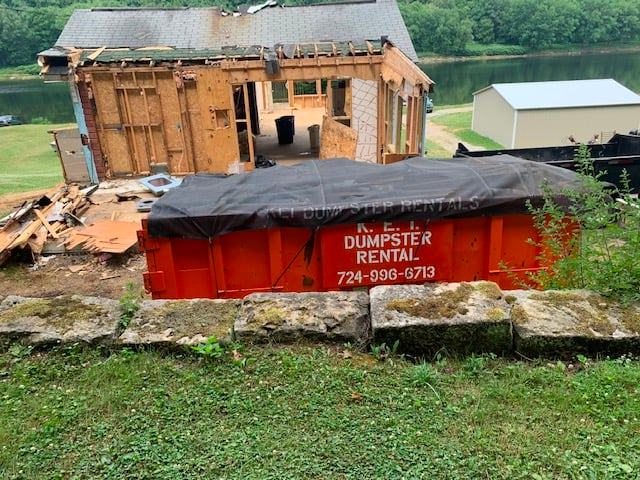
A KEI roll-off dumpster sits behind a house that's being demolished because of fire damage.
Dumpster rentals can go anywhere you need them.
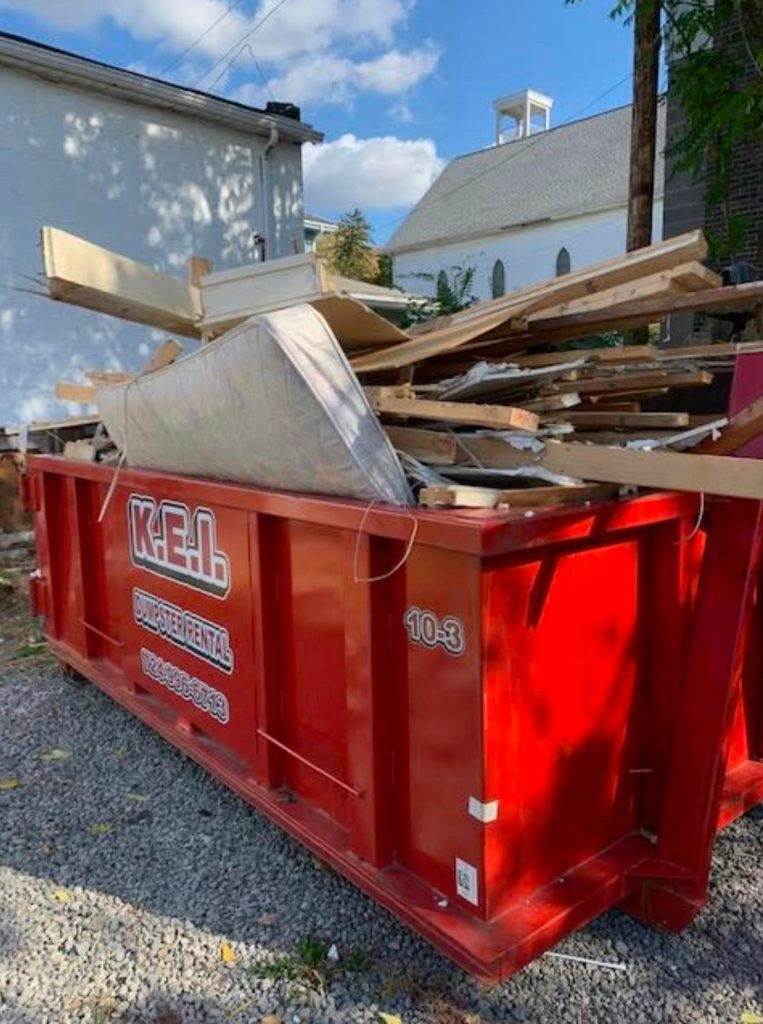
A full dumpster from a dumpster rental services company awaiting pickup.
Some items can't be tossed into your roll-off dumpster rental. Check with the rental company about restricted items to avoid additional fees and possible fines.
Materials

What Can You Put in a Roll-Off Dumpster?

Roll-off dumpsters can handle many of the materials generated by home cleanouts, renovations and construction projects. Common uses include household junk, construction debris, yard waste, large furniture and mattresses.

Some materials are restricted or require different disposal arrangements. These should not be placed in a standard rental dumpster:

Batteries
Electronics
Freon-containing appliances
Gasoline and oil
Hazardous liquids and waste
Explosive or corrosive materials
Paint
Televisions
Tires

Disposal rules can change and some materials may have special requirements. If you’re unsure about an item, ask KEI before putting it in the container.

Don’t Overfill the Dumpster

Everything placed in the dumpster should remain below the top of the container walls so the load can be transported properly.

Don’t wait until pickup day to ask about an unusual material or an overloaded container. If the project changes and you’re generating more debris than expected, contact KEI and discuss the options.

A roll-off dumpster rental from KEI sits next to a construction project full of debris.
KEI's standard dumpster rental contract is 7 days. If you need it removed sooner or want it longer, just let us know and we can work it out.
Rental Period

How Long Can You Keep a KEI Dumpster?

KEI’s standard rental period is seven days.

If you finish sooner, you can contact KEI about an earlier pickup. If the project is going to take longer, additional rental time may be available for an additional fee.

For larger jobs, multiple dumpsters or an exchange of a full dumpster for an empty one may be available when arrangements are made for the project.

Pricing

How Much Does Dumpster Rental Cost?

The cost of a dumpster rental can depend on the dumpster size, how long you need it, the type and weight of the material, and the details of the project.

Instead of choosing a dumpster based only on the lowest advertised number, make sure you understand what is included in the rental and whether additional charges can apply.

KEI maintains a separate Dumpster Prices page for current pricing information. For a specific project, contact KEI with the delivery location, expected debris, preferred size if known and project timeline.

View Dumpster Prices

When you contact KEI, share:

  • Delivery location
  • Expected debris
  • Preferred size, if known
  • Project timeline
By Project

Dumpster Rental for Common Projects

01

Dumpster Rental for Home Cleanouts

Cleanouts are one of the most common reasons to rent a roll-off dumpster. Garages, basements, attics and entire homes can accumulate much more material than expected once the sorting begins.

A dumpster on the property allows you to work through the project without making repeated disposal trips. It can also be useful for estate cleanouts, moving preparation and getting a property ready for sale.

02

Dumpster Rental for Remodeling and Construction

Remodeling and construction projects can create a steady stream of debris. Flooring, drywall, cabinets and other removed materials can fill a work area quickly if there isn’t a designated place for disposal.

Contractors and homeowners can schedule a dumpster around the project so debris can be removed from the work area as the job progresses.

For heavy materials or unusually large projects, discuss the debris with KEI before choosing a dumpster.

03

Dumpster Rental for Roofing Projects

Roofing is another project where dumpster size and material weight matter.

If you’re renting for shingles or other roofing debris, tell KEI that when you call. That gives the company the opportunity to discuss the job and the appropriate rental setup before delivery.

Why KEI

Why Rent Locally From KEI Dumpster Rental?

KEI Dumpster Rental is based at 106 Harper Road in Chicora, Pennsylvania and provides roll-off dumpster service throughout Butler County and surrounding areas.

Customers can choose from 10, 15, 20, 25 and 30-yard dumpsters for cleanouts, remodeling, roofing, construction and other approved uses.

You can call and discuss the actual project instead of guessing about the size, placement or material requirements.

KEI Dumpster Rental

106 Harper Road
Chicora, PA 16025

724-996-6713

Request More Information
Common Questions

Frequently Asked Questions

1What sizes does KEI Dumpster Rental offer?+

KEI currently offers 10, 15, 20, 25 and 30-yard roll-off dumpsters.

2How long is a standard KEI dumpster rental?+

KEI’s standard rental period is seven days. Earlier pickup or additional rental time can be discussed with KEI.

3Can I put a dumpster in my driveway?+

A driveway is a common placement location when there is sufficient space and truck access. Site conditions vary, so confirm placement before delivery.

4Do I need a permit?+

A permit may be required if the dumpster will occupy a street, sidewalk or other public property. Check current requirements with the municipality responsible for the location.

5Can I put electronics, tires or paint in the dumpster?+

Electronics, televisions, tires and paint are among the restricted items. Contact KEI about current disposal requirements before loading anything you’re unsure about.

6Can KEI provide more than one dumpster for a large project?+

Multiple dumpsters or an empty-and-return arrangement may be available for larger projects.

7How do I know which size to rent?+

Tell KEI what you’re working on and what you’ll be disposing of. The project type, amount of debris and material can all affect the appropriate size.

Need a Dumpster for an Upcoming Project?

If you’re planning a cleanout, renovation, roofing job or construction project, contact KEI Dumpster Rental to discuss the job and available dumpster sizes.

Call: 724-996-6713

Related: Dumpster rental in Butler, PA
KEI Dumpster Rental
106 Harper Road, Chicora, PA 16025
Email: sales@keidumpsterrental.com

5 Ways to Speed Up Garage Clean-Outs

Garage Clean Outs main

Garage clean-outs aren’t a preferable way to spend the day. But if you’re like most homeowners, your garage ends up serving as a catch-all for items you don’t know where else to put. Over time, this leads to a cluttered and disorganized space (and probably nowhere to park your vehicles).

Taking the time to clean out your garage and get it organized frees up space, reduces your stress, and increases the value of your home.

In this blog, we’ll discuss 5 ways to speed up garage clean-outs so you can get organized and back to doing the things you prefer in your free time. Learn how to:

1 – Break it down

Trying to do too much in one day can lead to garage clean-out failure. You may end up frustrated with the mess and walk away before you’ve accomplished your goal.

Rather than trying to bring order to chaos in a day, break it down into smaller, manageable tasks. Here are a few steps you can take to make the job less overwhelming.

  • Survey the area. Look around in the garage and note the areas that need your attention the most. Maybe it’s just a corner where all the junk no one knows what to do with gets piled and ignored. Maybe the entire garage could do with a thorough clean-out. Make a mental note of how big the task is before you move on to the next step.
  • Prioritize the work. Once you identify the areas that need your attention, prioritize them in order of importance. Consider how much time it takes for each task and which areas are the most cluttered when deciding which to tackle first.
  • Create a plan. After you’ve prioritized the work, draft an action plan. Break down each area into smaller tasks – clearing out one shelf at a time, sorting through one box at a time – so you don’t get discouraged.
  • Schedule time. Make a schedule and stick to it. It’s easy to give up on a garage clean-out if you don’t have clear goals and time to meet them. If it helps keep you on task, make a progress chart and check off each chore as you complete it.
  • Take breaks. Rome wasn’t built in a day, and your garage isn’t going to get uncluttered in a day, either. Taking frequent breaks helps you avoid burnout and task abandonment. Take a walk, have a snack, or enjoy a cup of coffee.
A full roll-off Dumpster rental from KEI sits in a driveway. Renting a dumpster makes quick work of garage clean-outs.
Garage clean-outs are easier and more efficient when you have a roll-off dumpster rental on site to dispose of junk.

2 – Rent a roll-off dumpster

Renting a roll-off dumpster saves you time and money when cleaning out your garage. Some municipal garbage companies charge extra if you go over your weekly curbside pickup limit. Others may not take the kind of debris you have stored in your garage for disposal, leaving you to haul it back and forth to the dump.

Skip the hassle by ordering a roll-off dumpster rental. Here are some helpful tips for choosing the best option.

  • Choose the right size. A 10- or 15-yard dumpster is appropriately sized for most garage clean-outs. If you have a lot of construction debris or other bulky items, you may need a larger size. Consult with your roll-off dumpster rental service to choose the best fit.
  • Consider the weight limit. Dumpsters have weight limits. The smallest sizes usually can handle about 2 tons of junk and other trash with the largest sizes capable of holding 3.5 tons of material.
  • Determine the location. Consider where you want your dumpster placed. Putting it in the driveway is ideal unless you have a narrow drive or limited space. If you must put it in the street, check with your municipality to determine if you need a special permit.
  • Establish a rental period. KEI returns 7 days after it delivers the rental dumpster to retrieve it without a reminder. If you want to keep the dumpster longer than a week, you’ll need to make special arrangements with us.
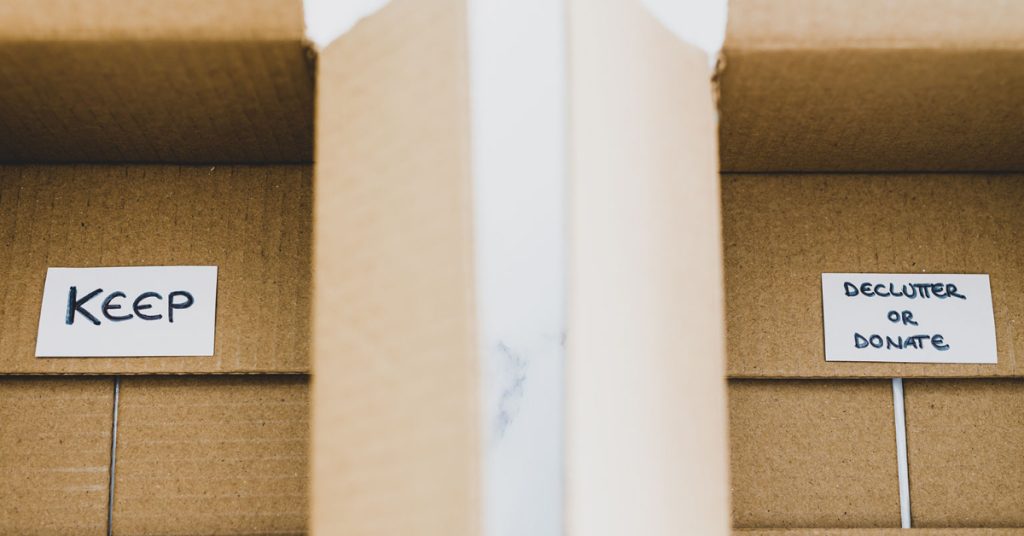
Two boxes, one labeled Keep and the other labeled "Declutter or Donate" used during garage clean-outs for following the 3-pile method of decluttering.
Using the 3-pile method for garage clean-outs helps you decide what to keep, what to donate, and what to toss.

3 – Use the “3-pile garage clean-outs” method

Now that you have a roll-off dumpster rental on site, you can begin the task at hand. Using the 3-pile method helps you decide what to keep, what to donate, and what to toss into the dumpster.

You need a plan for how to sort through your items that include which area to start with and who gets to make the decision about whether something should be kept, donated, or tossed. Here are some other tips for making the process go more smoothly.

  • Be realistic when deciding what to keep, donate, and toss. Consider whether items have sentimental value or are truly useful. A good rule of thumb is to determine the last time you used something if you’re on the fence about whether to keep it or get rid of it.
  • Donate or sell items that are in good condition but no longer serve a purpose in your household. You could hold a garage sale if you have enough items in this category or consider donating them to a charity.
  • Recycle or toss items that are broken, outdated, or otherwise unusable. Check with your municipal garbage collection company to find out which items you can recycle curbside to make the job easier.
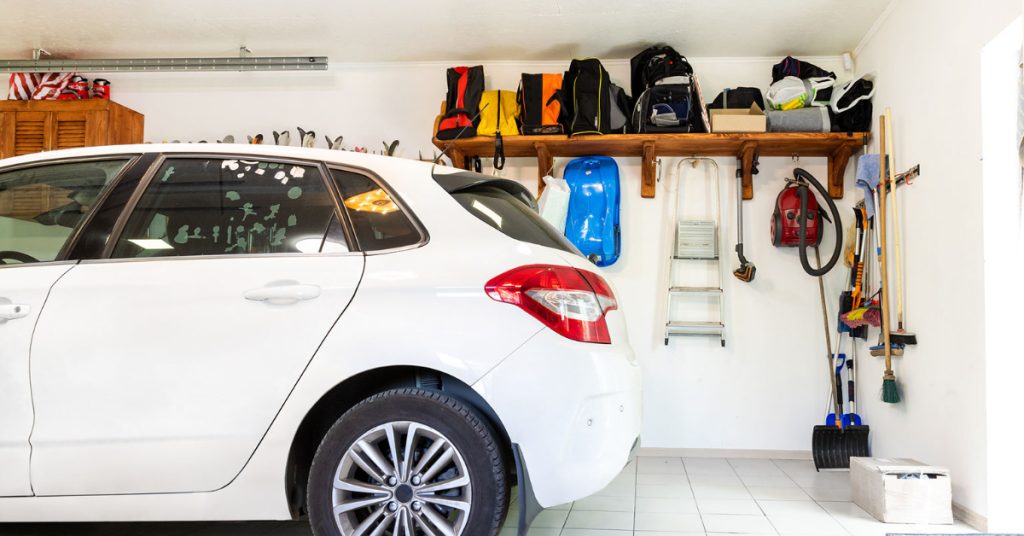
Garage clean-outs work best when you use storage solutions like the ones pictured here to keep your items organized. A white car fits into the garage once everything is organized.
Fitting all your garage items – plus your vehicle – is possible after a garage clean-out if you use storage systems to get organized.

4 – Get storage solutions for garage clean-outs

For the items in your keep pile, consider investing in some garage storage solutions so things don’t get cluttered again. Cabinets, shelves, and storage bins can help you sort and neatly store your belongings, so you don’t have to go through the hassle of cleaning things out again anytime soon.

Using storage solutions also helps you locate items more quickly. It also gives you more space to work with during the garage clean-out process.

A group of friends helps with a garage clean-out.
Asking friends or family for help can keep you motivated to complete garage clean-outs.

5 – Ask for help with garage clean-outs

Don’t be afraid to ask for help from family or friends. Having extra sets of hands can make the garage clean-out go faster and keep you motivated to finish the job.

Toss some food on the grill or order some of their favorites to thank them for their assistance. You also could offer to return the favor for their next decluttering task.

Hiring a professional organizer also might be a good idea if you have too much stuff and not enough time – or help – to sort it all yourself.

Dumpster rentals near me

Finding a roll-off dumpster rental to accommodate your garage clean-out needs isn’t difficult when you contact KEI.  We have 4 sizes of roll-off rental dumpsters suitable for any decluttering job. Some of our dumpsters have lower sides, making it easier to load them from any angle.

Not sure which size dumpster you need to get the job done? Give us a call at 724-996-6713 and a member of our team can help find the right fit for your garage clean-out project.